


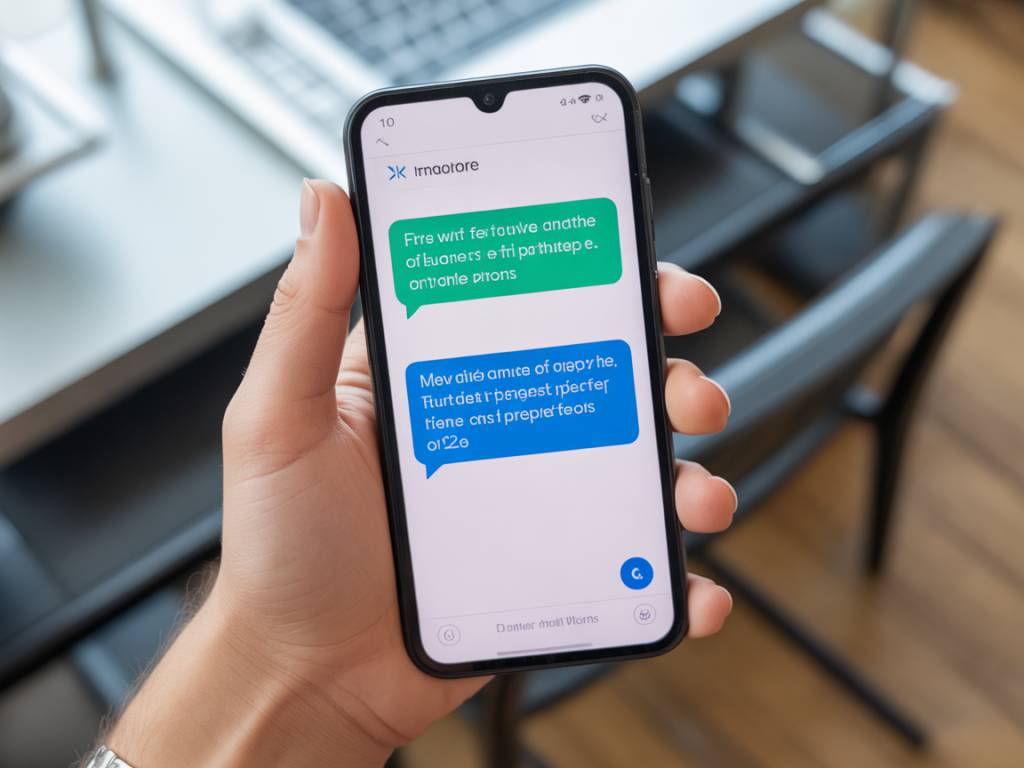
Understanding RCS Messaging and Why It Matters Now
Rich Communication Services (RCS) is often described as the successor to SMS, bringing app-like experiences directly into the native messaging inbox. While SMS has been the default mobile messaging standard for more than 30 years, its limitations are becoming increasingly obvious in a world dominated by rich, interactive digital experiences. RCS messaging aims to close that gap with richer media, branding, and two-way interactivity built into the default messaging app on Android devices.
From a marketing and mobile strategy perspective, RCS messaging is not just a technical evolution of SMS. It represents a shift from simple, one-way text alerts to fully interactive, branded conversations. As we approach 2026, the spread of RCS across carriers, devices, and regions is creating a new landscape for customer engagement, customer care, and mobile commerce.
For brands that heavily rely on SMS marketing, transactional alerts, and customer notifications, understanding RCS now is critical. The brands that prepare early will be in a stronger position when RCS reaches mass adoption and becomes the default channel for mobile messaging campaigns.
From SMS to RCS: What Changes for Brands?
SMS is simple, universal, and reliable. However, it is also rigid: 160 characters, no native rich media, and very limited branding options. RCS messaging changes that by offering a richer, app-like experience within the messaging interface.
Some of the most important RCS features for marketers include:
- Rich media support: High-quality images, carousels, GIFs, audio, and video directly within the message thread.
- Branded sender IDs: Logo, color schemes, and verified business profiles to build trust and reinforce brand identity.
- Interactive elements: Quick-reply buttons, suggested actions, calendars, maps, product carousels, and in-message forms.
- Two-way conversational flows: More intuitive customer journeys, from browsing to support to purchase, inside the message thread.
- Delivery and read receipts: Rich analytics including message delivery, read status, and interaction rates.
Compared to SMS, RCS turns the messaging channel into a hybrid of live chat, mobile website, and mini-app. For e‑commerce, finance, travel, utilities, and retail brands, this offers new ways to simplify complex processes, reduce friction, and drive conversions.
The State of RCS Adoption on the Road to 2026
RCS messaging has been in development for years, but its adoption has accelerated thanks to broader support from mobile carriers, Google, and Android device manufacturers. Most modern Android phones now support RCS through Google Messages or operator-branded messaging apps.
However, the landscape is still fragmented:
- Coverage and capabilities differ by market and mobile operator.
- RCS is primarily an Android ecosystem technology; iOS does not natively support RCS at the time of writing.
- Brands must work with messaging aggregators and CPaaS providers to handle different RCS implementations and fallbacks to SMS or MMS.
Despite these challenges, the trajectory is clear. As more Android users are automatically upgraded to RCS-capable messaging and as carriers refine interoperability, RCS will increasingly function as the default messaging standard on Android. By 2026, most major markets are expected to have stable, large-scale RCS coverage, particularly for business messaging use cases.
For brands, this means that the period from now until 2026 is less about waiting for a perfect, universal standard and more about gradually integrating RCS alongside SMS, experimenting with use cases, and learning how customers engage with richer messaging experiences.
Key Use Cases for RCS Business Messaging
RCS messaging is particularly relevant for brands that already use SMS for marketing, notifications, and customer support. The underlying business objectives remain the same, but the execution becomes more visual, interactive, and customer-centric.
Common RCS use cases include:
- Promotional campaigns: Replace plain-text SMS promotions with rich product carousels, tappable CTAs, and dynamic content to increase click-through rates and conversions.
- Transactional alerts: Send shipping updates, flight notifications, appointment reminders, and payment confirmations with visuals, maps, and interactive options (e.g., “Reschedule”, “Track package”).
- Customer support and service: Offer conversational support directly in the messaging app, with guided flows, FAQs, and escalation to a live agent if needed.
- Onboarding and education: Use step-by-step guides, videos, and buttons to help new customers understand products or complete account setup.
- Mobile commerce: Enable browsing, selection, and even payment flows inside the RCS thread, minimizing redirects to mobile websites or apps.
As RCS matures, more advanced scenarios become possible, such as personalized product discovery based on user data, contextual cross-selling, and automated retention campaigns that adapt to customer behavior in real time.
RCS vs SMS vs OTT Apps: Positioning the Channel
Brands already operate in a complex messaging ecosystem: SMS, email, WhatsApp, Messenger, in-app messaging, and push notifications are all part of the mix. RCS adds another layer, but it does not replace every channel. Instead, it redefines what is possible within the default carrier messaging environment.
From a strategic point of view:
- RCS vs SMS: RCS is the richer, more interactive evolution of SMS on compatible devices. Where available, it should become the preferred option for high-value, high-engagement campaigns. SMS remains essential as a universal fallback.
- RCS vs OTT apps (WhatsApp, Messenger, etc.): Third-party apps require user installation and often explicit opt-ins on each platform. RCS leverages the native messaging app, which already has massive reach and user familiarity, particularly on Android.
- RCS vs brand apps: Where apps offer the deepest engagement, they also face friction in downloads and re-engagement. RCS provides a lightweight, instant alternative for specific tasks and journeys, especially for less frequent interactions.
By 2026, the most effective messaging strategies are likely to be channel-agnostic, using customer data, consent, and context to decide whether a message should be delivered via RCS, SMS, WhatsApp, email, or push. In that environment, RCS positions itself as a high-impact, mid-funnel tool combining reach and rich interaction.
How Brands Can Prepare Their SMS Strategy for an RCS Future
Preparing for RCS messaging does not mean abandoning SMS. Instead, brands should design a hybrid approach where RCS enhances, rather than replaces, existing SMS-based programs. A practical roadmap can help marketing and CRM teams transition progressively.
Key steps include:
- Audit your current SMS use cases: Map all the touchpoints where SMS is used today: marketing campaigns, one-time passwords (OTP), alerts, reminders, customer service, and retention. Identify which journeys would most benefit from richer visuals, interactivity, and two-way communication.
- Work with a CPaaS or messaging provider that supports RCS: Select a platform that can orchestrate RCS and SMS together, including intelligent fallbacks. This ensures that users without RCS support still receive messages, while RCS-capable devices benefit from enhanced experiences.
- Start with a pilot project: Choose one or two high-value use cases—such as promotional campaigns or order tracking—to test RCS. Monitor performance versus traditional SMS in terms of click-through rates, conversions, and user satisfaction.
- Design for conversation, not just broadcasting: RCS is fundamentally more conversational than SMS. Plan flows that anticipate customer replies and actions, with clear quick-reply options and guided journeys rather than single, isolated messages.
- Invest in creative and UX for messaging: Treat RCS threads like mini-interfaces. Develop templates with brand colors, logos, carousels, and CTAs. Ensure that messages load quickly and are visually consistent with your website and app.
- Review consent and compliance policies: RCS business messaging still requires explicit opt-in and adherence to local regulations (such as GDPR or TCPA). Make sure your consent flows, privacy policies, and unsubscribe mechanisms extend seamlessly to RCS campaigns.
By embedding RCS in a broader messaging strategy rather than treating it as a standalone experiment, brands can avoid silos and create a consistent, omnichannel experience.
Measuring the Impact: Analytics and Optimization in RCS
One of the significant differences between SMS and RCS is the level of feedback and analytics. Traditional SMS offers limited visibility: delivery status and, in some cases, short-link click data. RCS, on the other hand, is designed with richer telemetry in mind.
Brands can typically access:
- Delivery and read receipts for individual messages.
- Interaction data on buttons, quick replies, and carousels.
- Drop-off points in multi-step conversational flows.
- Comparative performance between RCS and SMS fallbacks.
To prepare for 2026, marketing teams should build measurement frameworks that incorporate RCS-specific events and KPIs. This includes attributing conversions to RCS interactions, running A/B tests on different message designs, and benchmarking performance against legacy SMS campaigns and other channels like email or WhatsApp.
Over time, the combination of behavioral data and RCS analytics can support more advanced personalization, such as dynamic content, predictive next-best actions, and segmentation based on engagement profiles.
Risks, Challenges, and How to Mitigate Them
While the potential of RCS messaging is significant, brands must also be realistic about the challenges that come with any emerging technology.
The main risks include:
- Fragmented support: Not all carriers and devices support the full RCS feature set. Some users will still receive SMS or MMS fallbacks, potentially leading to uneven experiences.
- Platform dependency: RCS is heavily tied to the Android ecosystem. For iOS users, SMS, MMS, email, and OTT apps still remain the primary channels.
- Cost and complexity: RCS messages are more complex to design, manage, and test than standard SMS. Pricing models may also differ, requiring careful ROI analysis.
- User expectations: A richer UX raises the bar. Poorly designed RCS journeys may frustrate users more than a simple text would have.
To mitigate these risks, brands should:
- Ensure robust SMS fallback to guarantee reach and reliability.
- Plan channel strategies separately for Android and iOS, aligning RCS with equivalent experiences on other platforms (e.g., WhatsApp Business, Apple Messages for Business where relevant).
- Start small, iterate quickly, and use data to refine RCS experiences over time.
- Collaborate with experienced partners—CPaaS providers, agencies, and UX designers—who understand RCS best practices.
Looking Toward 2026: What a Mature RCS Ecosystem May Look Like
By 2026, several trends are likely to shape how brands use messaging channels, including RCS, as part of their overall marketing and customer experience strategies.
We can anticipate:
- Higher consumer expectations: Rich, interactive messaging will feel normal across multiple platforms. Static, one-way SMS messages will increasingly feel outdated for anything other than essential alerts.
- Deeper integration with CRM and CDP systems: RCS interactions will be connected to real-time customer data, allowing hyper-personalized messaging and dynamic content selection.
- Further automation and AI: Chatbots and conversational AI will handle more customer interactions inside RCS threads, streamlining support, recommendations, and transactions.
- More standardized best practices: As more brands adopt RCS, patterns will emerge for effective designs, use cases, and KPIs, reducing the experimental risk for late adopters.
Brands that start experimenting with RCS now will be better equipped to navigate this environment. They will have data on what works, teams familiar with the format, and a clear understanding of how RCS fits within a larger mix that includes SMS, email, push, and OTT messaging apps.
Ultimately, the shift from SMS to RCS is part of a broader move toward richer, more conversational, and more contextual customer engagement. Preparing for 2026 means treating messaging not just as a channel for notifications, but as a strategic space where brand experiences, commerce, and customer relationships are actively built.