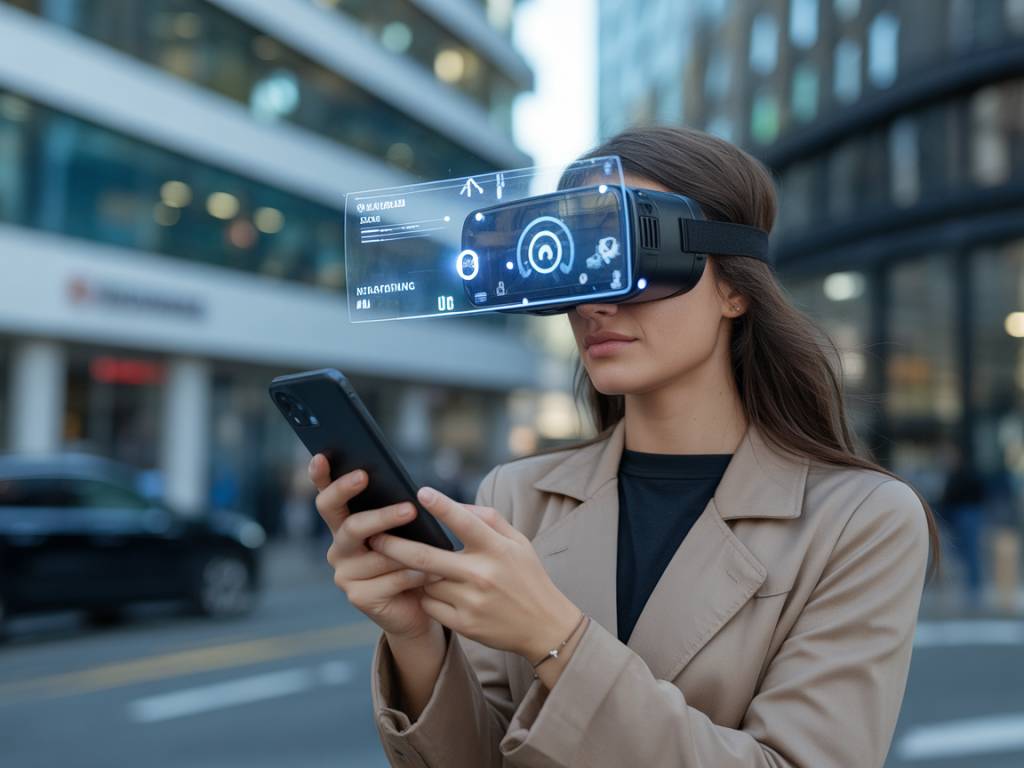
Augmented reality has moved from experimental campaigns to a core component of mobile marketing strategies. By 2026, advances in 5G, on-device AI, and AR development tools are enabling brands to deliver immersive, personalized, and measurable experiences directly on smartphones. For marketers, augmented reality marketing is no longer a futuristic add-on; it is becoming a powerful driver of engagement, conversion, and brand differentiation in mobile environments.
The State of Mobile Augmented Reality in 2026
Several technological shifts are transforming how marketers can use AR on mobile devices:
- Widespread AR-capable hardware: Most mid-range and high-end smartphones now support advanced AR features, from depth sensing to spatial tracking, making mobile AR experiences smoother and more realistic.
- 5G and edge computing: High-speed, low-latency connectivity allows for richer assets, real-time rendering, and cloud-based object recognition, which is critical for dynamic AR campaigns.
- WebAR maturity: Browser-based augmented reality reduces friction by eliminating the need to download dedicated apps, making AR marketing campaigns more accessible and shareable.
- AI-powered personalization: On-device AI and cloud models enable contextual AR content that adapts to user behavior, location, time of day, and past interactions.
These developments position AR as a scalable, data-rich channel within the broader mobile marketing ecosystem, sitting alongside social media, search, and in-app advertising.
Why Augmented Reality Matters for Mobile Marketing
Augmented reality in mobile marketing addresses several persistent challenges: attention scarcity, ad fatigue, and the gap between digital media and physical products. AR interactivity and immersion change how consumers discover, evaluate, and remember brands.
- Higher engagement: AR ads and experiences typically generate longer interaction times than static formats, increasing the likelihood of message retention.
- Product understanding: Virtual try-ons, 3D visualizations, and in-context previews help users grasp features, size, and fit, reducing purchase hesitation.
- Emotional impact: Immersive experiences can evoke curiosity, delight, and a sense of play, which contributes to stronger brand affinity.
- Data and insight: AR interactions capture granular behavioral data—such as what users look at, how long they engage, and which variations they prefer—feeding back into performance optimization.
For brands focused on mobile-first audiences, especially Gen Z and younger millennials, AR marketing offers a natural extension of how these users already communicate, play, and shop on their phones.
Virtual Try-On and Product Visualization
One of the most mature and effective AR mobile marketing use cases is virtual try-on. In sectors such as beauty, fashion, eyewear, and home decor, AR helps bridge the gap between aspiration and purchase.
- Beauty and cosmetics: AR filters allow users to test lipsticks, foundations, and eye shadows on their own faces in real time, supported by AI-based shade matching and skin tone analysis.
- Apparel and accessories: Consumers can virtually try sneakers, watches, jewelry, and hats, rotating and zooming to inspect details before buying.
- Home and furniture: Mobile AR tools place 3D models of sofas, lamps, and decor in the user’s living space, scaled accurately to dimensions, helping them visualize entire room setups.
For marketers, these AR experiences can be integrated into multiple touchpoints: product pages on mobile web, brand apps, social platforms, and even AR-enabled display ads. Conversion-focused tactics include:
- “Try before you buy” CTAs: Prominent calls to action that launch AR directly from product feeds or mobile ads.
- Saved looks and wishlists: Users can save AR try-on results, share them, and return later, creating a mobile remarketing opportunity.
- Dynamic recommendations: Based on AR interaction data, brands can surface complementary items and alternative styles in real time.
Location-Based and Geospatial AR Campaigns
Location-based augmented reality marketing leverages GPS, geofencing, and visual positioning systems to deliver experiences tied to specific places. This is especially relevant for retail, tourism, events, and quick-service restaurants.
- Store discovery and footfall: AR navigation can guide users to nearby stores, overlaying directions and offers onto the real environment via their smartphone camera.
- Local offers and coupons: When users point their phone at a storefront or a street, AR layers can surface time-limited promotions or loyalty rewards.
- City-wide experiences: Brands can create AR treasure hunts, collectible content, or city tours that blend entertainment with promotions.
The strength of geospatial AR in mobile marketing lies in its ability to connect digital storytelling with real-world context. By 2026, more precise visual positioning and 3D city models will allow marketers to anchor assets to buildings, landmarks, and interiors, opening new formats for place-based AR advertising.
Gamified AR Experiences and Branded Worlds
Gamification and AR are a natural pair. Adding a game layer to the physical world creates compelling mobile experiences that can significantly boost dwell time and social sharing.
- Collect-and-win mechanics: Users can discover and collect virtual objects in their environment to unlock discounts, limited-edition products, or digital badges.
- AR mini-games inside apps: Brands can embed small, replayable AR games in their mobile apps—such as catching falling products, customizing avatars, or solving spatial puzzles.
- Event-based activations: At festivals, sports events, or trade shows, AR layers can transform stages, booths, and fan zones into interactive branded spaces.
Gamified augmented reality marketing is particularly effective for product launches and seasonal campaigns. To maximize impact, marketers should:
- Align game mechanics with brand values and campaign narratives.
- Offer meaningful rewards that connect back to core products or services.
- Design easy entry points, minimizing steps between discovery, play, and reward redemption.
Social AR Lenses and Creator Collaborations
Social platforms remain a crucial distribution channel for mobile AR experiences. Lenses, filters, and effects are now essential tools in digital brand storytelling.
- Branded AR lenses: Custom face filters and world effects allow users to embody or interact with brand elements, turning them into co-creators of marketing content.
- Creator-led AR campaigns: Influencers and AR creators design signature effects that their communities adopt, giving campaigns organic reach and authenticity.
- UGC-driven amplification: User-generated AR content can be repurposed as ads, social proof, and community highlights across mobile channels.
To leverage social AR in 2026, marketers should treat AR effects as part of their always-on social strategy, not just one-off stunts. Measurement frameworks can track shares, saves, completions, and downstream behaviors such as profile visits or link clicks.
In-Store and Phygital Experiences
Augmented reality can also enhance physical retail, creating “phygital” experiences where mobile devices act as a bridge between shelves and digital content.
- Product education: Scanning packaging or shelves with a smartphone camera can reveal story layers, usage tutorials, ingredient details, or sustainability information.
- Smart fitting rooms: AR assistants in-store can suggest complementary items, show different colorways virtually, or display style recommendations.
- Interactive displays: Physical installations with AR markers encourage shoppers to engage with products in playful or informative ways.
By connecting in-store AR to loyalty apps and mobile wallets, brands can deepen customer profiles and orchestrate remarketing campaigns after the visit, based on what users explored and scanned.
WebAR: Reducing Friction in AR Campaigns
While native apps remain essential for deeply integrated AR experiences, WebAR plays an increasingly strategic role in mobile marketing by minimizing friction.
- No app download required: Users access AR via a simple URL or QR code, lowering barriers for first-time engagement, especially in paid media.
- Omnichannel integration: WebAR links can be placed in social ads, email campaigns, SMS, digital out-of-home, and packaging, ensuring consistent experiences across touchpoints.
- Rapid experimentation: Marketers can test multiple AR concepts quickly without going through app store approvals or large app updates.
In 2026, combining WebAR for reach and accessibility with app-based AR for loyalty and depth is a common strategy for brands building a robust augmented reality marketing stack.
Measurement, Analytics, and Attribution in AR Marketing
As AR marketing matures, performance measurement is becoming more sophisticated. Standard mobile metrics are now complemented by AR-specific behavioral signals.
- Engagement depth: Time spent in AR, number of interactions, scenes viewed, and completion rates for experiences.
- Commerce KPIs: Add-to-cart rates after AR try-on, conversion uplift versus non-AR journeys, and average order value variations.
- Spatial behavior: Which products users focus on, how they move around a 3D scene, and what they return to.
- Cross-channel attribution: Tracking how AR exposures influence subsequent search queries, store visits, or direct traffic over time.
Privacy regulations and platform changes require marketers to adopt privacy-by-design approaches in AR data collection. Aggregated analytics, on-device processing, and clear consent flows are essential to maintaining user trust while still gaining insight into AR performance.
Best Practices for Implementing AR in Mobile Marketing
Brands looking to scale augmented reality marketing should follow several key principles.
- Start from the customer problem: Define what AR will help the user accomplish—understand a product, have fun, compare options—before choosing technologies or effects.
- Optimize for mobile performance: Keep 3D assets lightweight, ensure fast load times, and test across a range of devices and network conditions.
- Design intuitive UX: Provide simple onboarding, clear instructions, and obvious exit paths. AR should feel effortless, not confusing.
- Align with brand identity: Visual style, tone of voice, and storytelling should match existing brand guidelines and campaigns.
- Plan for iteration: Treat AR like any other digital channel: test multiple variations, review analytics, and refine assets based on user behavior.
Collaboration between marketing, product, and technology teams is critical. Many organizations are building internal AR capabilities or partnering with specialized studios and platforms to accelerate execution.
Emerging Trends Shaping AR Marketing Beyond 2026
Looking ahead, several developments are likely to influence how AR is used in mobile marketing strategies.
- Cross-device AR experiences: While smartphones remain central, AR content will increasingly span wearables and other connected devices, requiring more modular, interoperable assets.
- Generative AI for AR asset creation: AI-assisted tools will lower production costs by generating 3D models, textures, and environments at scale.
- Context-aware personalization: Real-time context signals—weather, activity patterns, and location history—will inform dynamically tailored AR scenes.
- Standardization and interoperability: Industry standards around 3D formats and AR anchors will make it easier to deploy campaigns across platforms and ecosystems.
For marketers, the central opportunity is to treat augmented reality not as a novelty but as a strategic layer across the entire mobile customer journey, from awareness and discovery to purchase and loyalty. Brands that invest now in AR capabilities, experimentation frameworks, and integrated measurement are likely to set the benchmarks for immersive mobile marketing in the years ahead.